
By Albert Repicci
Greenwich Time, Thursday, November 17, 1988
On the eve of Kristallnacht, the night of shattered glass, I began to explain to my children the purpose of lighting a commemorative candle in remembrance of that night of horror, the begin¬ning of the open persecution of Jews in Germany.
Drawing from the Greenwich Time’s article, “Night of terror’s lessons” (Nov. 7), the warning rang hard and true that complacency and failure to act against the atrocities carried equal blame with the ac of the perpetrators. Excerpts and quotes from the article that were a focus of discussion included: “The failure of nations to protest Kristallnacht…
sent a signal that (Hitler) could proceed with genocide without interference from the outside world…. The people who didn’t raise their voice must share the blame…. That day will be one of the moments of history by which we judge the fundamental good and evil of man. … It is a warning against all the little prejudice and injustice that occur daily…. It is a warning against moral laxness.”
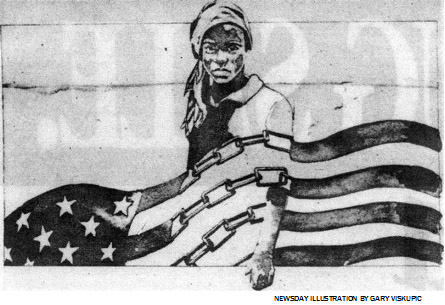
I explained to my children that Nazi Germany does not represent the only historical period replete with oppression against humanity. In the United States slavery persisted for nearly 80 years after the drafting of the Constitution. Slaves, written into man’s law as the property of their masters, could be dis¬patched at their master’s will. Disregarding the basic moral flaw that genocide or slavery could be legislated into law, societies accepted the status quo and perpetuated the barbarism while generations to follow bore the shame of their forefather’s insensitivity.
Proudly watching the election returns later that same evening, relishing the workings of the American Democratic process, my attention was drawn to the frequent reference to a candidate’s position on abortion. Not having taken an active anti-abortion role, I reflected momentarily on some recent statistics I had read stating that in one year 1.6 million unborn babies’ lives are terminated by abortion, averaging 4,000 abortions per day in the United States.
I became haunted by the comparisons to be drawn between the Holocaust article, discussion of slavery and the abortion issue. It was quite sobering to envision our grandchildren in years to come, lighting a candle memorializing the sentencing of millions of unborn babies to death, hence judging our present generation no less harshly than we have judged the perpetrators and acquiescent bystanders of the Holocaust.